
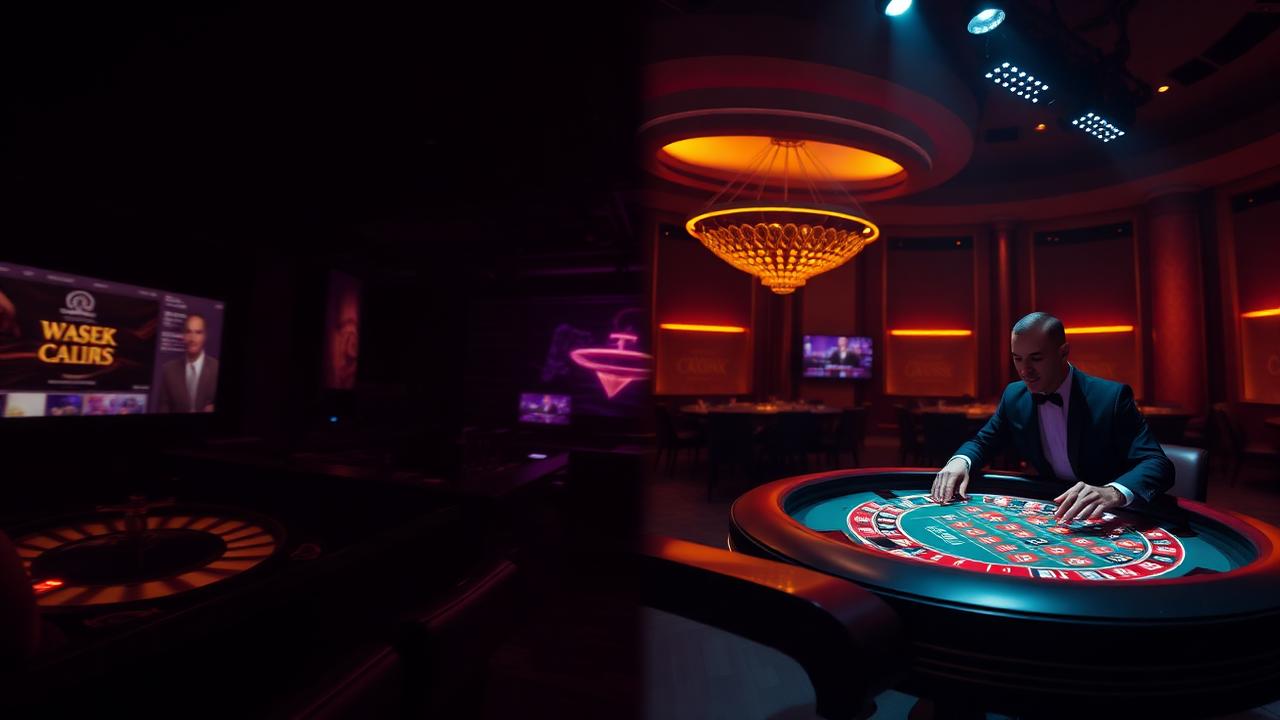
The History of Live Casino – From 2006 Webcam Streams to 2026 4K Multi-Camera Studios
The live casino industry has undergone one of the most dramatic technological transformations in online gaming. What began as grainy webcam feeds from basement studios has evolved into Hollywood-quality productions featuring multiple 4K cameras, professional dealers, and interactive elements that rival television broadcasts. This journey from humble beginnings to cutting-edge entertainment represents twenty years of innovation, adaptation, and technological breakthroughs.
The Pioneer Era: 2006-2010
When Evolution Gaming launched the first commercially viable live casino product in 2006, the technology was revolutionary yet primitive by today's standards. Players could finally interact with real dealers and watch actual cards being dealt, but the experience came with significant limitations.
The initial setup consisted of basic webcams positioned above blackjack and roulette tables in converted studios. Stream quality maxed out at 480p resolution, and buffering issues were common. Players often experienced delays of several seconds between placing bets and seeing results, making the experience feel disconnected from traditional casino gaming.
Despite these technical hurdles, the concept immediately resonated with players who craved authenticity in their online gaming experience. The ability to see a real person dealing cards or spinning a roulette wheel created a level of trust that random number generators simply couldn't match. Early adopters were willing to overlook technical imperfections for this unprecedented level of transparency.
The dealer experience during this era was equally challenging. Studios were often repurposed conference rooms with basic lighting and minimal production value. Dealers worked in isolation, speaking to cameras without seeing or hearing players. This one-way communication created an odd dynamic where dealers had to maintain energy and professionalism while essentially talking to themselves for hours.
The Growth Phase: 2011-2015
As internet infrastructure improved and streaming technology advanced, live casino operators began investing heavily in production quality. This period marked the transition from amateur webcam setups to professional broadcast standards.
HD streaming became the norm by 2012, dramatically improving visual clarity and player engagement. Studios were redesigned with professional lighting, branded backgrounds, and multiple camera angles. The introduction of picture-in-picture technology allowed players to view both the main game action and close-up shots of cards or the roulette wheel simultaneously.
Game variety expanded significantly during this period. While blackjack and roulette dominated the early years, operators introduced live baccarat, casino hold'em, and three-card poker. Each new game required careful consideration of camera placement, dealer training, and user interface design to maintain the quality standards players had come to expect.
Mobile compatibility became crucial as smartphone adoption accelerated. Operators had to balance visual quality with data usage, creating mobile-optimized streams that could function reliably on 3G networks. This technical challenge led to innovations in adaptive streaming technology that would prove essential for future developments.
The competitive landscape began taking shape as Playtech, NetEnt, and other software providers launched their own live casino platforms. This competition drove rapid innovation in both technology and game design, with each provider seeking to differentiate their offerings through unique features or superior production values.
The Innovation Boom: 2016-2020
This period witnessed the most significant technological leaps in live casino history. Operators moved beyond simply streaming table games to creating immersive entertainment experiences that blurred the lines between gambling and television production.
Game show-style offerings like Evolution's Dream Catcher and Crazy Time revolutionized the industry. These games combined traditional casino elements with wheel-spinning excitement, bonus rounds, and augmented reality features that were previously unimaginable in live casino settings. Understanding the mechanics behind these innovative formats became essential for players looking to maximize their entertainment value.
Multiple camera angles became standard practice, with some games featuring up to eight different viewpoints. Players could switch between overhead shots, close-ups of the dealer, and specialized angles that captured every detail of card reveals or wheel spins. This cinematic approach transformed what was once a simple broadcast into a dynamic viewing experience.
Interactive chat functionality finally allowed two-way communication between players and dealers. Professional hosts were trained not just in game procedures but in entertainment value, creating personalities that players would specifically seek out. Some dealers developed devoted followings, with players timing their sessions to play with their favorite hosts.
The introduction of side bets and special features added new dimensions to traditional games. Lightning Roulette, with its random multipliers, demonstrated how classic games could be enhanced without losing their essential appeal. These innovations required sophisticated backend systems to manage random number generation, multiplier calculations, and seamless integration with live action.
The Mainstream Acceptance: 2021-2024
COVID-19 accelerated live casino adoption as land-based venues closed and players sought authentic gaming experiences from home. This period saw live casino transition from a niche offering to a mainstream entertainment option that rivaled traditional online games in popularity.
Production values reached television broadcast quality during this era. Studios invested in professional set design, advanced lighting systems, and broadcast-grade cameras that captured every detail in stunning clarity. Some operators began filming in 4K resolution, though most streams remained in 1080p to accommodate varying internet speeds and device capabilities.
Regional customization became increasingly important as live casino expanded globally. Operators created dedicated studios for specific markets, featuring dealers who spoke local languages and understood cultural preferences. Time zone considerations led to 24/7 operations with studios strategically located around the world to provide optimal dealer schedules for different regions.
The integration of artificial intelligence began changing how games were managed and presented. AI systems could analyze player behavior, suggest optimal betting strategies, and even adjust camera angles based on the most exciting moments in each game. These behind-the-scenes improvements enhanced the player experience without creating obvious technological intrusions.
Mobile gaming finally reached parity with desktop experiences during this period. Advanced mobile apps could stream high-quality video while maintaining responsive betting interfaces and chat functionality. The gap between mobile and desktop live casino experiences essentially disappeared, enabling truly seamless gaming across all devices.
The Current State: 2025-2026
Today's live casino environment represents the culmination of twenty years of technological advancement and creative innovation. Modern operations combine Hollywood-level production with cutting-edge streaming technology to create experiences that often exceed the quality of land-based casinos.
Current 4K multi-camera setups utilize up to twelve different angles per game table, with AI-powered direction systems that automatically select the most engaging shots. Robotic camera mounts enable smooth movements and dramatic angles that were impossible with static setups. Professional lighting designers create atmospheres that enhance the gaming mood while ensuring optimal visibility for all camera angles.
Dealer training programs now rival those of professional broadcasters. Hosts learn not only game procedures but also entertainment techniques, audience engagement strategies, and technical troubleshooting. Many dealers have developed personal brands and social media followings, becoming celebrities within the gaming community.
The emergence of themed studios has created new possibilities for game presentation. Operators now offer everything from luxury yacht settings to fantasy medieval environments, with fully immersive backgrounds and custom dealer costumes. These themed experiences often feature exclusive games or modified rules that match the setting's atmosphere.
Advanced analytics systems track every aspect of gameplay, from betting patterns to player engagement metrics. This data drives continuous improvements in game design, studio layout, and dealer training. Operators can identify which camera angles generate the most excitement, which dealers create the strongest player retention, and which game variations perform best in different markets.
Technology Infrastructure and Innovation
The technical infrastructure supporting modern live casino operations is remarkably sophisticated. Content delivery networks ensure smooth streaming to players worldwide, with redundant systems preventing interruptions during peak traffic periods. Edge computing brings processing power closer to players, reducing latency and improving responsiveness.
Advanced compression algorithms allow 4K streams to function reliably on standard broadband connections. Adaptive bitrate streaming automatically adjusts quality based on each player's connection speed, ensuring optimal experiences across different technical environments. These systems can seamlessly transition between quality levels without interrupting gameplay.
Blockchain technology is beginning to influence live casino operations, particularly in areas like game integrity verification and transparent random number generation. Smart contracts could automate certain aspects of game management while providing players with verifiable proof of fair play.
Augmented reality features are being tested that could overlay additional information directly onto live streams. Players might see historical statistics, strategy hints, or enhanced visualizations of game elements without disrupting the core experience. These AR enhancements represent the next frontier in live casino innovation.
Market Impact and Player Behavior
Live casino growth has fundamentally changed online gaming demographics and behavior patterns. The format attracts players who previously avoided online gambling due to trust concerns, while also appealing to younger demographics who value interactive entertainment experiences.
Session lengths in live casino games typically exceed those of standard online games, indicating higher engagement levels. Players often develop preferences for specific dealers, games, and even particular time slots, creating loyalty patterns that operators can leverage for retention strategies.
The social aspect of live casino gaming has proven surprisingly important. Chat features create communities of regular players who interact with each other and dealers, forming relationships that extend beyond individual gaming sessions. This social element differentiates live casino from both traditional online games and land-based experiences.
Revenue per player in live casino typically surpasses other online gaming categories, though this varies significantly by market and operator. The combination of extended session times, higher average bets, and strong retention rates makes live casino an attractive offering for operators despite higher operational costs.
Looking Forward: Future Innovations
The next phase of live casino evolution promises even more dramatic changes. Virtual reality integration could create fully immersive casino environments where players feel physically present at gaming tables. Early VR prototypes demonstrate the potential for revolutionary experiences that combine live dealer authenticity with virtual environment flexibility.
Artificial intelligence will likely play an expanded role in game management and player interaction. AI dealers could handle routine tasks while human hosts focus on entertainment and complex decision-making. Machine learning systems might predict player preferences and automatically customize game presentations for individual users.
Cross-platform integration could allow live casino games to interact with social media, streaming platforms, and other entertainment services. Players might share exciting moments directly to social networks or participate in games that span multiple platforms simultaneously.
The continued improvement of internet infrastructure, particularly 5G networks, will enable even higher quality streams and more responsive interactions. Ultra-low latency connections could make live casino feel as immediate as in-person gaming while supporting advanced features that require real-time processing.
Frequently Asked Questions
Quick answers to common questions
Evolution Gaming launched the first commercially successful live blackjack game in 2006, streaming from a basic studio in Riga, Latvia. The setup used standard webcams and offered 480p video quality with significant delays between player actions and dealer responses. While primitive by today's standards, this pioneering effort established the foundation for the entire live casino industry and proved that players valued authentic dealer interaction over pure convenience.
Today's top-tier live casino studios rival professional television broadcast facilities in terms of equipment and production quality. They feature multiple 4K cameras with robotic mounts, professional lighting systems, advanced audio equipment, and sophisticated streaming infrastructure. Some studios employ former television directors and utilize broadcast-grade switchers, graphics systems, and post-production tools. The main difference is the focus on gaming rather than traditional entertainment content.
Several technological and market factors needed to align before live casino could achieve mainstream success. Internet speeds had to reach levels that could support consistent HD streaming, mobile devices needed sufficient processing power for smooth video playback, and operators required time to develop professional production standards. The 2016-2020 period coincided with widespread 4G adoption, improved compression algorithms, and increased consumer comfort with video-based online services.
Modern operators must manage complex technical infrastructure including global content delivery networks, real-time streaming to thousands of simultaneous players, and integration between live video feeds and sophisticated gaming platforms. They deal with varying internet speeds across different markets, mobile optimization challenges, and the need for 24/7 reliability. Additionally, operators must balance video quality with bandwidth requirements while maintaining sub-second latency for responsive gameplay experiences.
Early live casino dealers primarily needed gaming knowledge and basic camera presence. Modern dealer training programs are comprehensive, covering entertainment techniques, audience engagement, technical troubleshooting, and even social media awareness. Dealers learn to manage multiple games simultaneously, interact naturally with chat features, and maintain energy levels during long shifts. Some operators provide acting coaching and media training to help dealers develop distinctive personalities that attract regular players. The current generation of game-show formats showcases just how far this has come — our Crazy Time vs Monopoly Live vs Dream Catcher comparison looks at how three flagship titles use these production techniques in very different ways, and our news piece on Playtech opening a new live casino broadcast centre in Europe shows where the next generation of studios is being built.
About the Author

James Hartley
SEO Content Strategist
James Hartley is a seasoned seo content strategist with over 8 years of hands-on experience in SEO content strategy and digital marketing within the online gambling and technology sectors. Specialising in data-driven analysis and audience-first storytelling, James has helped leading iGaming brands build authoritative content ecosystems that rank, convert, and retain readers.
With a deep understanding of search engine algorithms, player behaviour, and regulatory landscapes across European and international markets, James delivers well-researched articles that blend expert insight with practical advice — empowering readers to make informed decisions whether they're exploring sports betting strategies, casino game guides, or industry news.

Get 100% Welcome Bonus up to €500!
New players only. Use code ZIZO2026 at registration.
Claim Your BonusComments (2)
Great article! These tips really helped me improve my betting strategy. The Champions League analysis was spot on.
Totally agree! I made some good picks using these insights.
Very informative content. Would love to see more articles about live betting strategies!
Related Articles

The House Edge at Every Live Casino Table – A Complete Comparison From Blackjack to Game Shows
Discover the house edge at every live casino table game. Compare blackjack, roulette, baccarat, poker variants, and game shows to find the best odds in 2026.
James Hartley
Speed Roulette vs Lightning Roulette vs Double Ball Roulette – Every Modern Variant Compared
Speed Roulette, Lightning Roulette, and Double Ball Roulette compared in-depth. Learn which modern variant suits your style, bankroll, and risk appetite best.
James Hartley
Monopoly Live Deep Dive – Bonus Round Probability, Expected Value, and Why Mr Monopoly Matters
An in-depth mathematical breakdown of Monopoly Live bonus rounds, probability calculations, expected value analysis, and strategic insights into Evolution Gaming's iconic wheel game.
James Hartley