
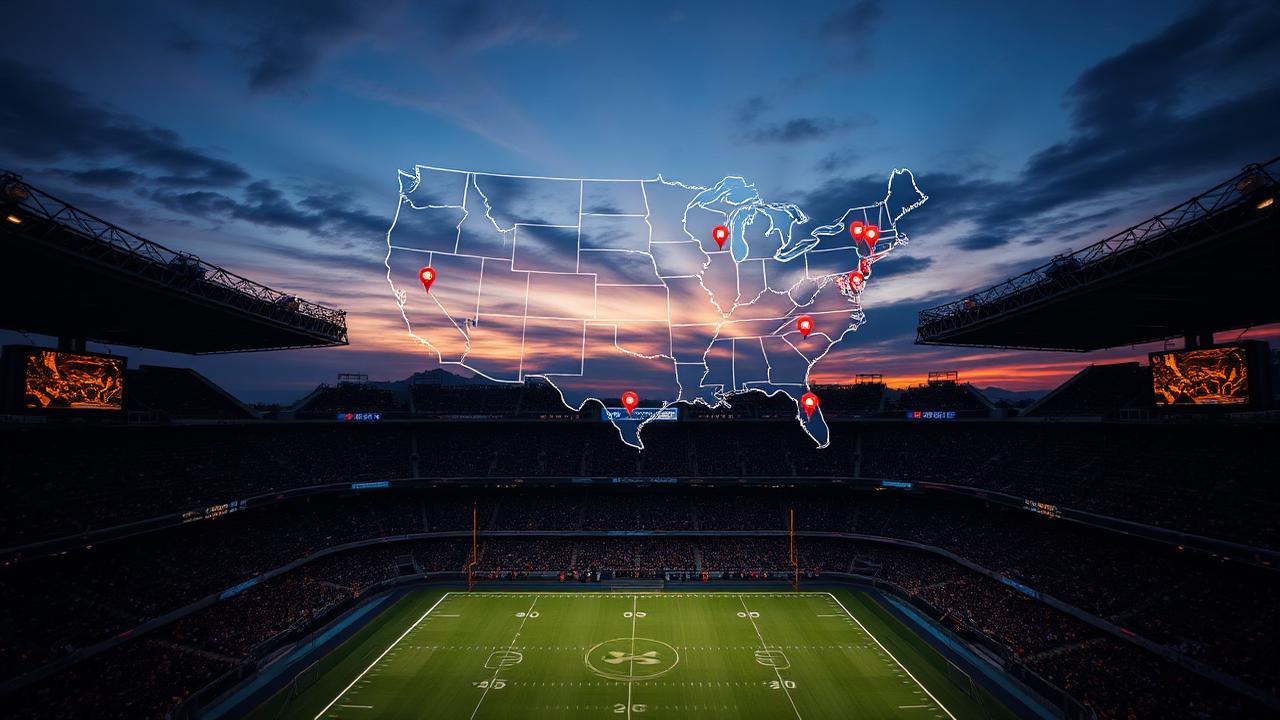
2026 World Cup Venue Guide – A Stadium-by-Stadium Look at All 16 Host Cities
The 2026 FIFA World Cup represents a watershed moment in football history. For the first time, the tournament will span three nations – the United States, Canada, and Mexico – hosting 48 teams across 16 carefully selected venues. This expanded format creates unprecedented opportunities for fans while showcasing some of North America's most impressive sporting facilities.
From the iconic MetLife Stadium in New York to the cutting-edge SoFi Stadium in Los Angeles, each venue brings its own character and capabilities to football's greatest stage. Understanding these stadiums becomes crucial for fans planning their World Cup experience, whether they're considering travel logistics, ticket strategies, or simply appreciating the architectural marvels that will host this historic tournament.
United States Venues: The Heart of World Cup 2026
MetLife Stadium – New York/New Jersey
MetLife Stadium stands as the crown jewel of World Cup 2026 venues, scheduled to host the tournament final on July 19, 2026. Located in East Rutherford, New Jersey, this 82,500-seat facility represents the largest stadium in the tournament lineup. Home to both the New York Giants and New York Jets, MetLife has already proven its ability to handle massive sporting events, including Super Bowl XLVIII in 2014.
The stadium's proximity to Manhattan – just 8 miles away – makes it incredibly accessible via public transportation. The venue features state-of-the-art amenities including 218 luxury suites and four club levels, ensuring comfort for premium ticket holders. Its retractable roof sections and advanced climate control systems provide optimal conditions regardless of weather.
SoFi Stadium – Los Angeles
Los Angeles brings Hollywood glamour to the World Cup through SoFi Stadium in Inglewood. This 70,240-seat architectural marvel opened in 2020 and quickly established itself as one of the world's most technologically advanced sports venues. The stadium's translucent roof and open-air design create a unique atmosphere while protecting spectators from the California sun.
SoFi's standout feature is the 360-degree 4K HDR video board – the largest in sports – which will provide unparalleled viewing experiences for World Cup matches. The venue's commitment to sustainability, including LED lighting and water conservation systems, aligns with FIFA's environmental goals for the tournament.
AT&T Stadium – Dallas
Dallas enters the World Cup conversation with AT&T Stadium in Arlington, Texas. Known locally as "Jerry's World" after Cowboys owner Jerry Jones, this 80,000-seat facility combines Texas-sized ambition with cutting-edge technology. The stadium's retractable roof and massive video screens create an indoor atmosphere that rivals any venue worldwide.
The facility's central location makes it accessible to fans from across the American heartland. Its experience hosting major events, including multiple Super Bowls and college football championships, demonstrates the operational excellence required for World Cup success. The stadium's premium amenities and climate-controlled environment ensure comfort during Texas summer weather.
Mercedes-Benz Stadium – Atlanta
Atlanta's Mercedes-Benz Stadium brings innovation to World Cup 2026 through its distinctive retractable roof design, which opens like a camera aperture. This 71,000-seat venue, home to the Atlanta Falcons and Atlanta United FC, already has extensive soccer experience, making it a natural fit for the World Cup.
The stadium's commitment to fan experience shows in details like the 360-degree halo video board and diverse food options at fixed concession prices. Atlanta's position as a major transportation hub, with the world's busiest airport, makes it easily accessible for international visitors.
Hard Rock Stadium – Miami
Miami brings tropical flair to the World Cup through Hard Rock Stadium in Miami Gardens. This 65,326-seat venue underwent extensive renovations completed in 2016, transforming it into a modern facility with partial roof coverage and improved sight lines throughout.
The stadium's location in South Florida provides natural appeal for international visitors, particularly from Latin America. Its experience hosting major events, including Super Bowls and college football championships, demonstrates operational readiness. The partial roof design protects fans from Miami's intense sun while maintaining the open-air atmosphere that defines Florida football.
Gillette Stadium – Boston
New England's representation comes through Gillette Stadium in Foxborough, Massachusetts. This 65,878-seat facility serves as home to the New England Patriots and New England Revolution, providing both NFL and MLS experience that translates perfectly to World Cup requirements.
The stadium's location, approximately 30 miles southwest of Boston, offers a more intimate setting compared to larger venues. Its design emphasizes sight lines and acoustics, creating an atmosphere that should amplify the passion of World Cup crowds. The facility's proven track record in cold weather operations could be valuable if tournament dates extend into traditional winter months.
Lincoln Financial Field – Philadelphia
Philadelphia brings passionate sports culture to the World Cup through Lincoln Financial Field. This 67,594-seat venue has hosted major soccer events previously, including international friendlies and CONCACAF Gold Cup matches, providing relevant experience for World Cup operations.
The stadium's location in South Philadelphia provides easy access to the city's historic attractions and renowned food scene. Its design incorporates modern amenities while respecting Philadelphia's rich sporting heritage. The facility's experience with high-energy crowds makes it well-suited for World Cup atmosphere.
Lumen Field – Seattle
Seattle's Lumen Field offers one of the most unique World Cup venues with its 69,000-seat capacity and distinctive architecture. Home to both the Seattle Seahawks and Seattle Sounders FC, this venue already boasts extensive soccer experience and passionate fan support.
The stadium's design amplifies crowd noise, creating one of the loudest environments in sports. Its location in downtown Seattle provides easy access to the city's attractions and demonstrates the Pacific Northwest's commitment to soccer culture. The partial roof design protects fans from Seattle's frequent rain while maintaining excellent sight lines.
Arrowhead Stadium – Kansas City
Kansas City brings heartland America to the World Cup through Arrowhead Stadium. This 76,416-seat venue holds the Guinness World Record for loudest crowd noise, promising an electric atmosphere for World Cup matches. Home to the Kansas City Chiefs, the stadium has established itself as one of American football's most intimidating venues.
The facility's central location makes it accessible to fans from across the Midwest. Recent renovations have modernized amenities while preserving the stadium's character and acoustic properties. The venue's experience with extreme weather conditions ensures reliable operations regardless of tournament timing.
NRG Stadium – Houston
Houston adds versatility to the World Cup lineup through NRG Stadium, a 72,220-seat facility with a fully retractable roof. Home to the Houston Texans, this venue offers complete climate control and flexibility for various event configurations.
The stadium's location in the nation's fourth-largest city provides extensive hospitality and transportation infrastructure. Its design allows for optimal playing conditions regardless of Houston's challenging summer climate. The facility's experience hosting major events, including Super Bowls and Final Fours, demonstrates operational excellence.
Mercedes-Benz Superdome – New Orleans
New Orleans brings cultural richness to the World Cup through the Mercedes-Benz Superdome. This 73,208-seat domed venue offers unique atmosphere and complete weather protection. The facility's iconic status and central role in New Orleans culture create a distinctive World Cup setting.
The stadium's location in downtown New Orleans provides easy access to the city's famous attractions and hospitality scene. Its experience hosting major sporting events, including multiple Super Bowls, demonstrates operational capabilities. The controlled environment ensures optimal playing conditions and fan comfort.
Canadian Venues: Northern Hospitality
BC Place – Vancouver
Vancouver represents Canada's Pacific Coast through BC Place, a 54,500-seat venue with a distinctive cable-supported roof. This facility has extensive soccer experience, having hosted matches during the 2015 FIFA Women's World Cup and serving as home to the Vancouver Whitecaps FC.
The stadium's downtown location provides easy access to Vancouver's attractions and demonstrates Canada's commitment to urban venue placement. Its retractable roof and modern amenities ensure comfort for World Cup visitors. The venue's experience with major soccer events makes it operationally ready for World Cup demands.
BMO Field – Toronto
Toronto brings Canada's largest market to the World Cup through BMO Field. This 30,000-seat soccer-specific stadium has undergone recent expansions and renovations to meet World Cup standards. As home to Toronto FC and the Toronto Argonauts, it offers extensive experience with major sporting events.
The venue's location on the grounds of Exhibition Place provides unique character while maintaining accessibility to downtown Toronto. Its design as a soccer-specific facility creates optimal sight lines and atmosphere for World Cup matches. Recent infrastructure improvements ensure modern amenities and operational capabilities.
Mexican Venues: Football Heritage
Estadio Azteca – Mexico City
Mexico City's Estadio Azteca carries unparalleled World Cup history, having hosted finals in both 1970 and 1986. This 87,523-seat venue will become the first stadium to host World Cup matches across three different tournaments, cementing its legendary status in football history.
The stadium's high altitude (7,200 feet) creates unique playing conditions that have historically favored certain playing styles. Its massive capacity and passionate Mexican support promise electric atmosphere for World Cup matches. Recent renovations have modernized facilities while preserving the venue's historic character.
Estadio BBVA – Monterrey
Monterrey adds modern Mexican football culture through Estadio BBVA, a 53,500-seat facility that opened in 2015. Home to CF Monterrey, this venue represents contemporary stadium design and operational excellence in Mexican football.
The stadium's modern amenities and technology provide optimal conditions for players and fans alike. Its location in Mexico's industrial heartland demonstrates the country's diverse regional representation in World Cup 2026. The facility's relatively recent construction ensures up-to-date infrastructure and systems.
Estadio Akron – Guadalajara
Guadalajara completes Mexico's World Cup trilogy through Estadio Akron, a 49,850-seat venue known for its distinctive architecture and passionate support. Home to CD Guadalajara (Chivas), this stadium embodies traditional Mexican football culture while offering modern facilities.
The venue's design creates excellent acoustics and sight lines throughout the facility. Its location in Mexico's cultural heartland provides authentic Mexican atmosphere for World Cup visitors. The stadium's experience with high-intensity matches and passionate crowds makes it well-suited for tournament play.
Planning Your World Cup 2026 Experience
With World Cup 2026 group stage value bets becoming increasingly popular among football enthusiasts, understanding venue characteristics becomes crucial for both attendance and betting strategies. Each stadium's unique features – from capacity and atmosphere to weather conditions and accessibility – can influence match outcomes and fan experiences.
Transportation infrastructure varies significantly between venues. Major metropolitan areas like New York, Los Angeles, and Mexico City offer extensive public transit options, while venues in smaller markets may require more careful planning. International visitors should consider visa requirements, particularly when planning multi-city itineraries across three countries.
Accommodation demand will be unprecedented, especially in smaller markets hosting World Cup matches for the first time. Early planning becomes essential, with many fans already securing reservations for 2026. The tournament's summer timing means pleasant weather in most venues, though southern locations like Miami and Houston may present heat challenges.
Ticket allocation across 16 venues creates more opportunities than previous World Cups, but also requires strategic thinking about which matches to attend. Group stage matches in iconic venues like Estadio Azteca or MetLife Stadium may be easier to secure than knockout rounds at the same locations.
The expanded 48-team format means the tournament will span 32 days, creating extended opportunities for fans to experience multiple venues and cities. This extended timeline allows for more comprehensive North American adventures, combining World Cup matches with broader cultural and tourist experiences.
Technical Preparations and Infrastructure
FIFA's venue selection process emphasized existing infrastructure and proven operational capabilities. All 16 stadiums have hosted major sporting events, reducing renovation requirements and ensuring operational readiness. This approach contrasts with previous World Cups that required extensive new construction.
Broadcast and media facilities receive particular attention, with each venue requiring upgrades to handle the massive global television audience. The tournament's span across multiple time zones actually benefits global broadcasting, allowing optimal viewing times for different regions.
Security coordination across three countries presents unique challenges, requiring unprecedented cooperation between national and local authorities. Each venue will implement FIFA's standardized security protocols while adapting to local conditions and requirements.
Pitch conditions and maintenance become critical factors, particularly for venues that host other sports. NFL stadiums will require careful surface management to ensure optimal playing conditions for football matches. Several venues have already begun pitch renovation projects in preparation for 2026.
Frequently Asked Questions
Quick answers to common questions
MetLife Stadium in East Rutherford, New Jersey will host the 2026 World Cup final on July 19, 2026. Located just 8 miles from Manhattan, this 82,500-seat venue is the largest stadium in the tournament and has extensive experience hosting major sporting events, including Super Bowl XLVIII. The stadium's size, location, and infrastructure made it the natural choice for football's biggest match.
The United States will host matches at 11 venues, while Canada and Mexico each have 2 stadiums selected. This distribution reflects the countries' relative sizes and infrastructure capabilities. The US venues span from coast to coast, including major metropolitan areas like New York, Los Angeles, and Miami. Canada's venues are in Vancouver and Toronto, while Mexico's venues are in Mexico City, Monterrey, and Guadalajara.
Only one venue has previous World Cup experience: Estadio Azteca in Mexico City, which hosted matches in both 1970 and 1986 World Cups, including both finals. This makes it the first stadium to host World Cup matches across three different tournaments. However, many other venues have hosted major international soccer matches, including several that were used during the 2015 FIFA Women's World Cup in Canada.
The largest venue is MetLife Stadium in New York/New Jersey with 82,500 seats, while the smallest is BMO Field in Toronto with approximately 30,000 seats after recent expansions to meet World Cup requirements. Most venues fall between 50,000-75,000 capacity, providing excellent atmosphere while meeting FIFA's minimum capacity requirements for World Cup matches.
Weather conditions will vary significantly across the tournament's geographic span. Northern venues like Vancouver and Seattle may experience cooler, potentially rainy conditions, while southern locations like Miami and Houston will likely face hot, humid weather during the summer tournament window. Several venues, including AT&T Stadium in Dallas and NRG Stadium in Houston, feature retractable roofs or domes to control climate conditions. Mountain venues may experience lower air pressure effects, particularly Estadio Azteca in Mexico City at 7,200 feet elevation. To understand how teams advance through these venues across the tournament, see our explainer on the 48-team World Cup 2026 format, groups and brackets.
About the Author

James Hartley
SEO Content Strategist
James Hartley is a seasoned seo content strategist with over 8 years of hands-on experience in SEO content strategy and digital marketing within the online gambling and technology sectors. Specialising in data-driven analysis and audience-first storytelling, James has helped leading iGaming brands build authoritative content ecosystems that rank, convert, and retain readers.
With a deep understanding of search engine algorithms, player behaviour, and regulatory landscapes across European and international markets, James delivers well-researched articles that blend expert insight with practical advice — empowering readers to make informed decisions whether they're exploring sports betting strategies, casino game guides, or industry news.

Get 100% Welcome Bonus up to €500!
New players only. Use code ZIZO2026 at registration.
Claim Your BonusComments (2)
Great article! These tips really helped me improve my betting strategy. The Champions League analysis was spot on.
Totally agree! I made some good picks using these insights.
Very informative content. Would love to see more articles about live betting strategies!
Related Articles

World Cup 2026 Third-Place Match – A History of the Forgotten Game and Why It Still Matters
The World Cup third-place match has a fascinating history. From dramatic goals to reluctant teams, discover why this 'forgotten game' still matters in 2026.
James Hartley
The World Cup 2026 Mascot, Ball, and Branding – Everything FIFA Has Revealed So Far
Discover everything FIFA has unveiled about World Cup 2026, from the vibrant mascot to the official match ball and tournament branding that will define this historic event.
James Hartley
How Club Managers Feel About the World Cup – The Annual Tension Between Clubs and Countries
Explore the annual conflict between club managers and international football as the World Cup disrupts domestic seasons, risking player injuries and team performance.
James Hartley